Last edit: 03/01/2026

EN ISO 13577 is the series of standards, at international level, that give prescriptions on how to design a safe Industrial Furnace.
More specifically, it specifies safety requirements for combustion and fuel handling systems that are part of industrial furnaces and associated processing equipment, including single and multiple burner systems in thermoprocessing equipment (TPE) and machines. It covers:
- Fuel pipework downstream of and including the manual isolating valve;
- Combustion air supply (including oxygen and oxygen enriched combustion air) and flue gas system;
- Burner(s), burner system and ignition device;
- Functional requirements for Safety Control System (SCS) or Safety Instrumented Systems (SIS).
It applies to any oxidation of gaseous and liquid fuels with air or other gases containing free oxygen to release thermal energy in TPE.
For thermal or catalytic post combustion and waste incineration, this document applies only to auxiliary burners designed to start-up and/or support the process.
This series does not cover hazards from heating generated by electricity; Electric Arc Furnaces safety is covered by ISO 13578, whose new revision started in 2026.
Finally, ISO 13577 series is not applicable to blast furnaces, converters (in steel plants), boilers, fired heaters (including reformer furnaces) in the petrochemical and chemical industries. API RP 535 is the reference standard in this sector and it provides requirements for the selection, specification, materials, and testing of burners for fired heaters in general refinery services designed in accordance with API 560.
In Europe, since the late 1990s, the EN 746 series served as the primary reference for the safety of industrial furnaces. The latest edition of EN ISO 13577-4 was published in July 2022. GT Engineering actively participated in its development, making a significant contribution to the Functional Safety section.
The new edition of EN ISO 13577-2 followed in 2023. By June 2024, all national editions of EN 746-2 (including those of Italy, the UK, France, Spain, and others) were officially withdrawn. As a result, EN ISO 13577-2 and EN ISO 13577-4 are now the sole reference standards for the safe design of industrial furnaces in Europe.
EN ISO 13577 consists of the following parts, published under the general title Industrial furnaces and associated processing equipment — Safety:
- Part 1: General requirements
- Part 2: Combustion and fuel handling systems
- Part 3: Generation and use of protective and reactive atmosphere gases
- Part 4: Protective systems
The acronym used in the standard to indicate industrial furnaces and associated processing equipment was IThE (EN 746-2) and it is now TPE.
What are the main changes compared to the 2014 edition of EN ISO 13577-2?
In General, the two new standards have nearly twice the number of pages than the EN 746-2 (220 vs 130 pages) and that is an evident sign that they better clarify how to design a safe furnace.
The group who develops the standard decided to remove the prescriptions for Solid Fuels. A dedicated standard may see the light in the future. Gas pressure Boosters have been added to the standard with several prescriptions
[ISO 13577-2: 2023] 4.4 Gas pressure boosters
When a gas pressure booster is used to ensure stable operation and control of the heating system, the following shall apply. The selection of seals and devices for the booster system shall consider:
- Temperature increase by isochore compression of the gas and
- Engine waste heat spreading from the booster into the pipework especially in case the gas flow stops (non-consumption of the TPE).
Line burners are now defined and their safety is now clearly stated.
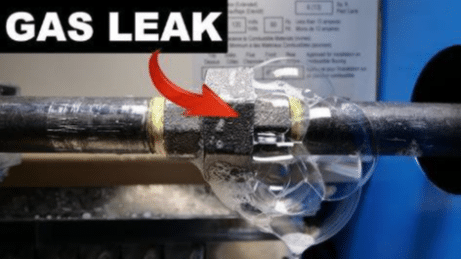
How to deal with the risk of the presence of an explosive atmosphere around the Gas train and outside the furnace is now well specified. It is now important that only certain tyoes of gaskets are used on flanges. Examples of suitable gaskets are:
- Aramid fibres bonded with rubber (NBR) with or without PTFE envelope;
- Spiral wound gasket;
- Expanded graphite with grater-type core;
- Moulded PTFE flat gaskets with stainless steel insert;
- Plain and filled PTFE.